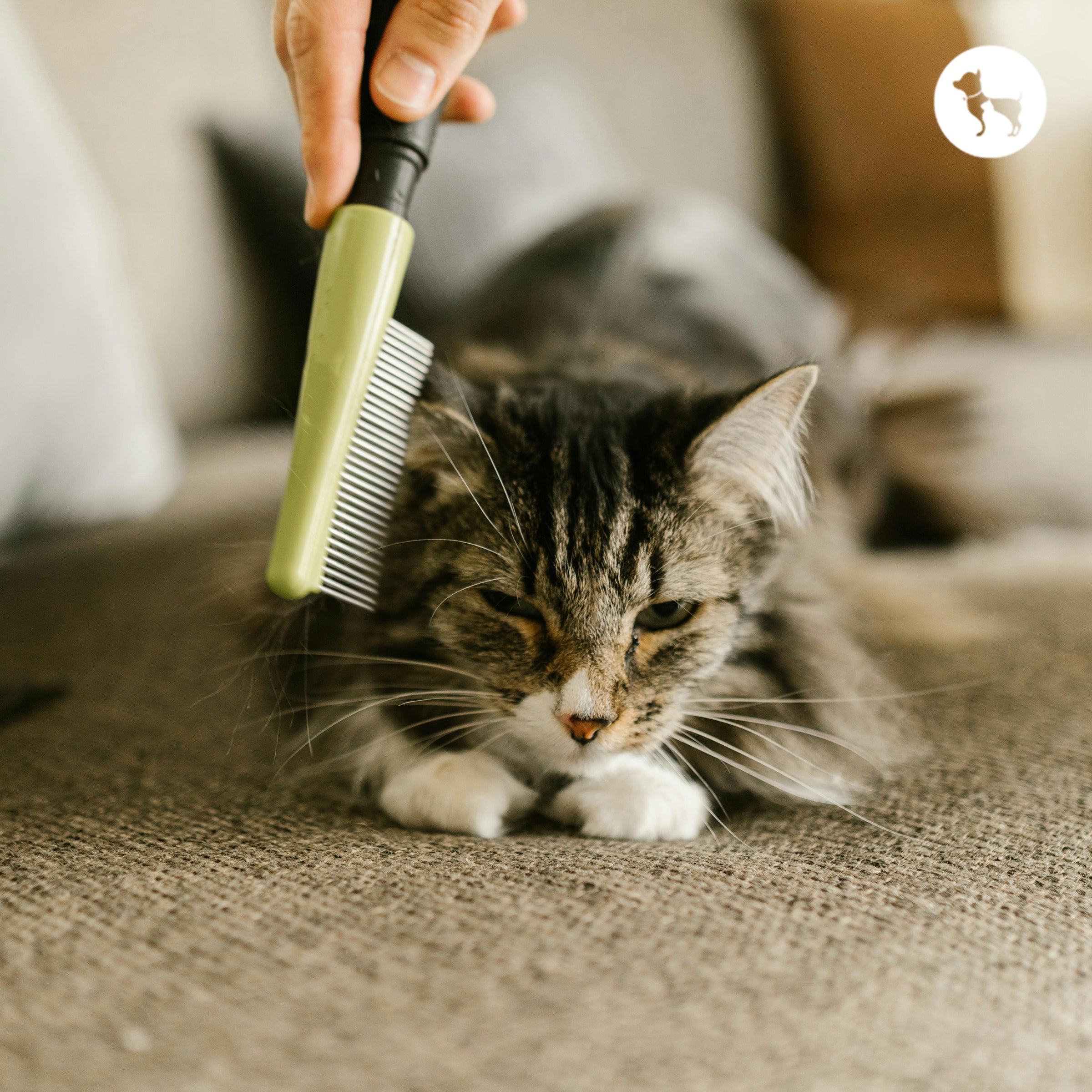
If you live with a long-haired cat, you know shedding is a year-round challenge. Fur ends up on cushions, clothes, corners, and sometimes even in your morning coffee. Beyond the mess, excessive loose hair can lead to painful mats, skin irritation, and frequent hairballs for your cat.
Long-haired breeds like Persians, Maine Coons, Himalayans, and indoor mixed breeds need regular grooming to stay comfortable. Their dense fur traps loose undercoat hair quickly, especially around the neck, belly, legs, and tail. Without the right brushing tools, tangles tighten, causing discomfort.
The right brush helps remove loose fur before it spreads, improves coat airflow, and supports healthier skin. But not all brushes work the same; some detangle, others smooth, and some remove deep undercoat shedding.
In this blog, discover the best brushes for long-haired cats, what they do, and how to build a stress-free brushing routine at home.

Long fur looks beautiful but requires more maintenance than short coats. Loose hair accumulates quickly, leading to shedding and other issues. Brushing isn’t just cosmetic; it’s essential.
Prevents Mats and Knots: Tangled fur often forms behind ears, under legs, around the belly, and near the tail. Regular brushing stops these knots from becoming painful.
Reduces Hairballs: Long-haired cats swallow more loose fur while grooming. Brushing removes loose hair before licking, lowering hairball risk.
Keeps the Coat Cleaner: Brushing removes dust, litter particles, food debris, and dead hair trapped in dense coats.
Improves Skin Health: Stimulates natural oil distribution, promoting shiny fur and healthier skin. It also helps spot fleas, dry patches, or lumps early.

Different brushes serve different purposes. Using only one brush type won’t fully manage shedding or tangles. Here’s a look at the most effective brushes for long-haired cats.
Narrow tooth combs feature fine, closely spaced teeth that remove loose fur and catch small debris near the skin.
Ideal for: Removing loose hair, managing tiny tangles, cleaning delicate areas like the face and ears, and checking for fleas or ticks.
Why it works: Rounded edges protect sensitive skin, improve circulation, and the rubber grip offers control.
Use carefully: Work slowly in sections to avoid pulling and hurting your cat.
Steel combs glide through long coats, removing loose surface fur and minor tangles.
Ideal for: Everyday coat maintenance, fluffing, smoothing, and removing dirt.
Benefits: Lightweight, easy to manoeuvre, helps check for remaining knots after slicker brushing.
Slicker brushes have fine wire bristles that reach deep into the coat, removing loose undercoat hair, small mats, and dead fur near the skin.
Ideal for: Reducing heavy shedding, preventing undercoat buildup, and detangling mats.
Benefits: Soft bristles bend for comfort, reduce mat formation, and keep coats breathable.
Maintenance: Comes with a brush cleaner for easy cleaning.
Bristle brushes smooth the topcoat and remove surface dust and dirt, rather than targeting deep undercoat hair.
Ideal for: Finishing grooming sessions, distributing natural oils, and adding shine.
Benefits: Gentle on skin, calming for nervous cats, great after outdoor play or litter box use.
Pin brushes with stainless-steel pins are versatile for daily brushing and mild detangling.
Ideal for: Daily maintenance, freeing small tangles, massaging skin, and distributing oils.
Benefits: Ergonomic handle for comfort, reduces static buildup.
Reducing shedding and maintaining a healthy coat in long-haired cats starts with the right grooming tools and routine. Brushes tailored for detangling, undercoat care, and surface cleaning make a big difference in comfort and coat health.
At Heads Up For Tails, you can find a curated range of grooming brushes and combs suited to your cat’s coat needs. Shop online or visit nearby HUFT stores for trusted tools that simplify daily grooming and keep your long-haired cat looking and feeling great.
Slicker brushes and steel combs are usually the best options for long-haired cats. They help remove loose undercoat fur, prevent tangles from forming, and keep the coat smoother. Using both together also makes grooming more effective and comfortable for your cat.
Long-haired cats should ideally be brushed daily or at least every other day. Regular brushing helps prevent mats, reduces shedding around the house, and keeps the coat cleaner and healthier, especially in areas where tangles form quickly.
Severe mats should not be pulled or cut at home because this can accidentally injure your cat’s skin. It is safer to consult a professional groomer or veterinarian who can remove mats carefully without causing discomfort.
Yes, regular brushing helps remove loose fur before your cat swallows it during self-grooming. This reduces the amount of hair entering the digestive system, which can help minimise frequent hairballs and improve overall coat maintenance.


 Dog
Dog
 Cat
Cat


 Youtube
 Facebook
 Instagram
 Linkedin