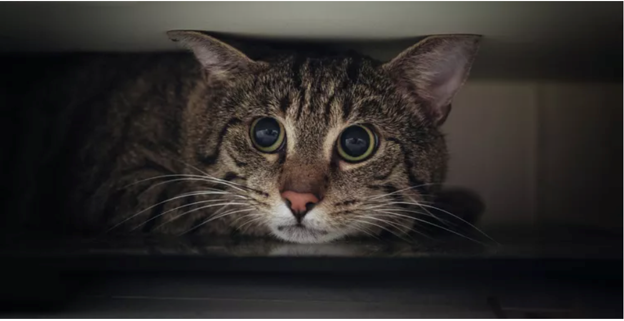
“Cats are so low maintenance.” Most cat parents have heard it, and many have said it.
It’s partly true. Cats don’t ask for much. But that isn’t because they need nothing. It’s because they’re wired to hide what they feel. In the wild, a cat who shows weakness becomes a target, so they learn to keep it hidden.
So a cat who seems fine on their own may not be fine at all. They may just be good at hiding it.
Here’s a closer look at what stresses cats, the early signs to watch for, and how to help.
Cats run on territory and routine. Their sense of safety comes from knowing where things are, who’s around and what happens next. Anything that disturbs that sense of safety can unsettle them.
Common triggers:
Moving house, or even moving the furniture around
A new pet, baby or housemate
Visitors, parties or construction noise
Loud sounds such as firecrackers, thunderstorms or drilling
Changes to their routine: meal times, your working hours, you going away
Tension with another cat at home, or a strange cat outside the window
A dirty, moved or shared litter box
Travel and vet visits
Boredom, especially for indoor cats with little to do
The upcoming festive season can also be hard on cats, with bright lights, visitors and firecrackers. Now is a good time to get your home ready.

Stress shows up in behaviour, appetite, grooming and litter habits. What matters is the change. Here are the signs to look out for:
They may meow often or yowl, or start hissing and growling. Meowing and yowling are usually bids for your attention. Hissing and growling mean they feel threatened and want space.
Grooming releases endorphins, so a stressed cat may groom to calm herself. Too much of it leads to sore skin, which leads to more licking. Look for thinning fur on the belly, inner legs or sides.
This is one of the most common signs. Some cats also spray walls or furniture to mark their territory, which helps them feel more secure. It can also point to a urinary infection, crystals or kidney problems, so see a vet before putting it down to stress.
Watch for stalking, pouncing, scratching or biting, often aimed at people or pets they are already familiar with. A cat who feels unsafe will defend herself. Pain (from arthritis or dental disease) and cognitive changes in older cats can cause this too.
Some cats fight. Others disappear. If they have tucked herself away, let her be. Pulling her out can make her stress worse.
Cats already sleep for much of the day, so look for a drop from their usual routine. Withdrawing into sleep is one way they cope with a world that feels like too much.
Stress releases cortisol, which can suppress appetite and even cause nausea. Lower energy also means fewer trips to the bowl.
Stress can inflame the gut. Treat this one with care, because it overlaps with many medical conditions.
You don’t need to wait for signs of stress to help your cat feel at ease. A few daily habits go a long way.
Play before meals. In the wild, a cat hunts, catches, eats, grooms and then sleeps. A short wand-toy session before dinner follows that natural rhythm and settles her for the evening.
End the game with a catch. Let her finally “win” by pouncing on the toy. Chasing something she can never catch, like a laser dot, can leave her frustrated.
Rotate her toys. Put a few away each week and bring them back later. Something old feels new again.
Try a slow blink. Look at her softly and close your eyes slowly. Cats read this as a sign of trust, and many will blink back.
Let her come to you. Sit nearby without reaching for her. Cats are more likely to approach when they feel they’ve chosen to.
Pet where she likes it. Most cats enjoy strokes on the cheeks, under the chin and around the base of the ears. Many don’t like their belly or tail being touched, even when they roll over.
Respect her “no”. A twitching tail, flattened ears or a turned head mean she’s had enough. Stopping when she asks builds trust.
Talk to her. A calm, familiar voice is reassuring, even when you’re just going about your day.
Give her a window. A perch with a view of birds, people or trees keeps her mind busy for hours.
Share your scent. A blanket or T-shirt you’ve worn, left in her bed, helps her feel close to you when you’re out.
Find the warm spots. Cats seek out warmth. A bed in a patch of sun or a soft blanket on a chair can become her favourite place.
Brush her, if she enjoys it. Gentle grooming mimics how cats groom each other and can be a quiet bonding ritual.
Cats hide pain well, and many stress signs look exactly like illness. Rule out medical causes before you treat it as stress.
They keep peeing outside the litter box, frequently.
They are eating or drinking less for more than a day
Overgrooming has left bald or sore patches
They have turned aggressive suddenly, or have been hiding for more than a day or two
Vomiting or diarrhoea keeps coming back
They are straining in the litter box and passing little or no urine (this is an emergency, especially in male cats)
They haven’t eaten anything for 24 hours or more
There is blood in their vomit or stool, or they seem weak or unresponsive
Your vet can also suggest calming support, such as pheromone diffusers, supplements or medication, if home changes aren’t enough. Never give them human medicines..
Cats don’t make a fuss about how they feel, so one of the best things you can give them is your time. Sit with them on a slow morning. Let them supervise while you work. Read on the sofa while they settle in beside you. Keep a few minutes each evening for a game that’s just for the two of you. Cats notice who shows up for them, and a calm, familiar presence is one of the most reassuring things a home can offer.


 Dog
Dog
 Cat
Cat


 Youtube
 Facebook
 Instagram
 Linkedin