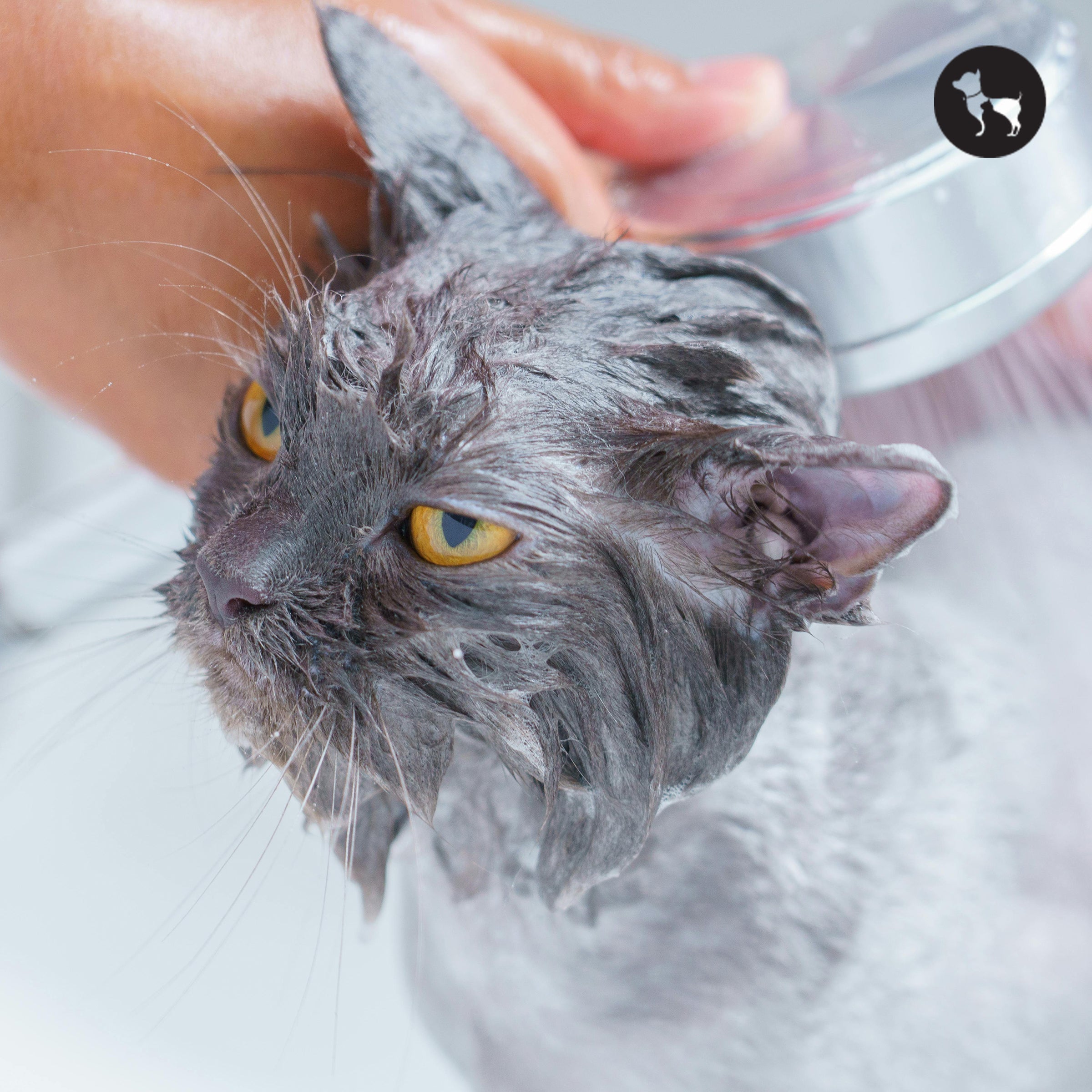
Bathing a cat already takes patience, and when your cat has sensitive skin, it can feel even more stressful. The wrong shampoo may leave their skin feeling dry, itchy, flaky, or irritated, turning something meant to help into another source of discomfort for them
Cats have a different skin pH than humans, and their grooming habits mean they ingest whatever residue is left on their coat. For cats with allergies, dermatitis, or reactive skin, the stakes are higher. The shampoo you choose either helps manage the condition or quietly makes it worse.
Here's a breakdown of what to look for and which Cat shampoos actually deliver for cats with sensitive skin.

Cat skin sits at a slightly higher pH than human skin, typically between 6 and 7.5. Human shampoos and even some dog shampoos can disrupt this balance, stripping the natural oils that keep the skin barrier intact. Once that barrier is compromised, allergens and irritants get in more easily, and the cycle of itching and inflammation continues.
For cats with existing sensitivities, this matters even more. Their skin is already in a reactive state. A harsh cleanser, even one with good intentions, can trigger a flare rather than calm one.
What sensitised cat skin actually needs:
pH-balanced formulation matched to feline skin
Gentle surfactants that cleanse without stripping
Soothing and moisturising actives like aloe vera, oatmeal, chamomile, or shea butter
No sulphates, parabens, alcohol, or artificial fragrance, all common irritants
Residue-free rinse, anything that lingers on the coat gets licked off

Sensitive skin can make bath time uncomfortable for many cats, especially if they deal with itching, dryness, flakes, or allergies. Choosing a gentle shampoo made for sensitive skin can help keep their coat clean while soothing and protecting their skin.
The Bubble Up Purr & Pretty Shampoo is sulphate-free, paraben-free, silicone-free, and alcohol-free. It's pH-balanced for feline skin and uses a plant-based formula, so it cleans without disrupting the skin barrier.
The active ingredients are well-chosen for sensitive skin. Chamomile extract has natural anti-inflammatory properties that help calm itching and redness on the skin surface. Aloe vera soothes irritation and supports healing in already-inflamed skin. Shea butter and Vitamin E provide deep moisture, which is especially useful for cats whose skin has been dried out by previous washes or environmental factors.
The Earthbath Hypo-Allergenic Shampoo is intentionally fragrance-free and colourant-free, which is exactly the point. It's designed for allergy-prone dogs and cats, older pets, and breeds or individuals with known skin sensitivities. The formula is mild enough for regular use and won't wash off topical flea treatments, so it fits into a broader skin management routine without complications.
Safe for all dogs and cats of over 6 weeks, this is the go-to option when you're dealing with a cat whose skin reacts to almost everything. It's not the most feature-rich shampoo on this list, but that's intentional. The fewer ingredients, the lower the risk of a reaction.
This Earthbath formula combines colloidal oatmeal with organic aloe vera — a pairing specifically designed for pets with dry, flaky, or irritated skin. The result is a shampoo that cleans, soothes, and re-moisturises in one step.
It's soap-free and pH-balanced, enriched with vitamins, and leaves the coat soft and plush rather than stripped. The vanilla and almond fragrance keeps it pleasant without the sharp chemical smell of medicated shampoos.
Where the fragrance-free Earthbath is the right call for diagnosed allergies, this oatmeal version is ideal for cats with chronic dryness and mild-to-moderate skin irritation.
Vanilla and honey aren't just there for the scent. Honey is a natural humectant that draws moisture into the skin, keeping the coat from drying out after washing. Wheat germ oil is rich in Vitamin E and fatty acids, and it actively supports healthy fur growth, useful for cats whose coats have thinned or lost condition due to skin issues.
The formula is gentle enough for young kittens, and because it's plant-based, it's a lower-risk option for cats who have reacted to more complex formulations in the past. It can also be used for adult cats and adult dogs with sensitive skin, making it a practical household staple if you have multiple pets.
The Forcans Mild Olive Shampoo is formulated for young puppies and kittens and those with sensitive skin. It's gentle enough for regular use, and the pump dispenser makes it easier to handle during the bath — particularly useful when one hand is occupied keeping a cat in place.
This one is less focused on allergy management and more on coat condition and gentleness. It's a good choice for cats who aren't dealing with active skin inflammation but need consistent, moisturising care to keep their coat healthy.
This one is specifically formulated for cats, particularly those with white or light-coloured coats. The protein and coconut oil base strengthens and conditions the coat while the neutral pH keeps it gentle on the skin.
Beyond brightening, it controls mats, tangles, and flyaway fur, making post-bath grooming significantly easier. It contains no bleach and is safe to use alongside topical flea and tick treatments. Cruelty-free.
For cat parents dealing with a white-coated cat who's also sensitive to harsh cleansers, this solves two problems at once — coat maintenance and skin compatibility.
Identify what you're managing. There's a meaningful difference between general sensitive skin, a diagnosed allergy, dry and flaky skin, and an active infection. Each requires a different type of formula:
Check the pH Balance: Any shampoo labelled for cats specifically, or labelled pH-balanced for pets, is a safer starting point than a human shampoo or a formula not designed with feline skin in mind.
Fewer Ingredients isn't Always Worse: For highly reactive cats, a shorter ingredient list means fewer potential triggers. The Earth bath Hypo-Allergenic formula is a good example, with a minimal ingredient list by design.
Patch test for New Formulas: Before a full bath, apply a small amount to a patch of skin and wait 24 hours. Any redness or increased itching at the site is a signal to try a different option.
Bath Frequency Matters: Over-bathing strips skin oils and worsens sensitivity, even with a gentle shampoo. For most cats, once every 4–6 weeks is appropriate unless a vet has recommended otherwise for a specific condition.
You can find all of these shampoos, along with the rest of your cat's grooming essentials, at Heads Up For Tails. Browse online or visit a HUFT store near you for hands-on guidance. Your cat's skin will thank you for getting it right!
Less is often more. Over-bathing disrupts the skin barrier and removes natural oils, which worsens sensitivity. For most cats with sensitive skin, once every 4-6 weeks is sufficient. If bathing is part of a treatment protocol, follow your vet's recommended frequency.
Avoid sulphates (SLS/SLES), parabens, alcohol, artificial dyes, and synthetic fragrances, all of which are common irritants for sensitive skin. Also, avoid essential oils (tea tree, eucalyptus, peppermint) unless specifically formulated for cats at safe concentrations, as many are toxic to felines.
Post-bath itching can result from incomplete rinsing (residue irritating the skin), a reaction to an ingredient in the shampoo, or the drying effect of the formula itself. Switching to a fragrance-free or oatmeal-based option and ensuring thorough rinsing usually resolves it. If it persists, it may indicate an underlying allergy worth investigating with a vet.


 Dog
Dog
 Cat
Cat


 Youtube
 Facebook
 Instagram
 Linkedin