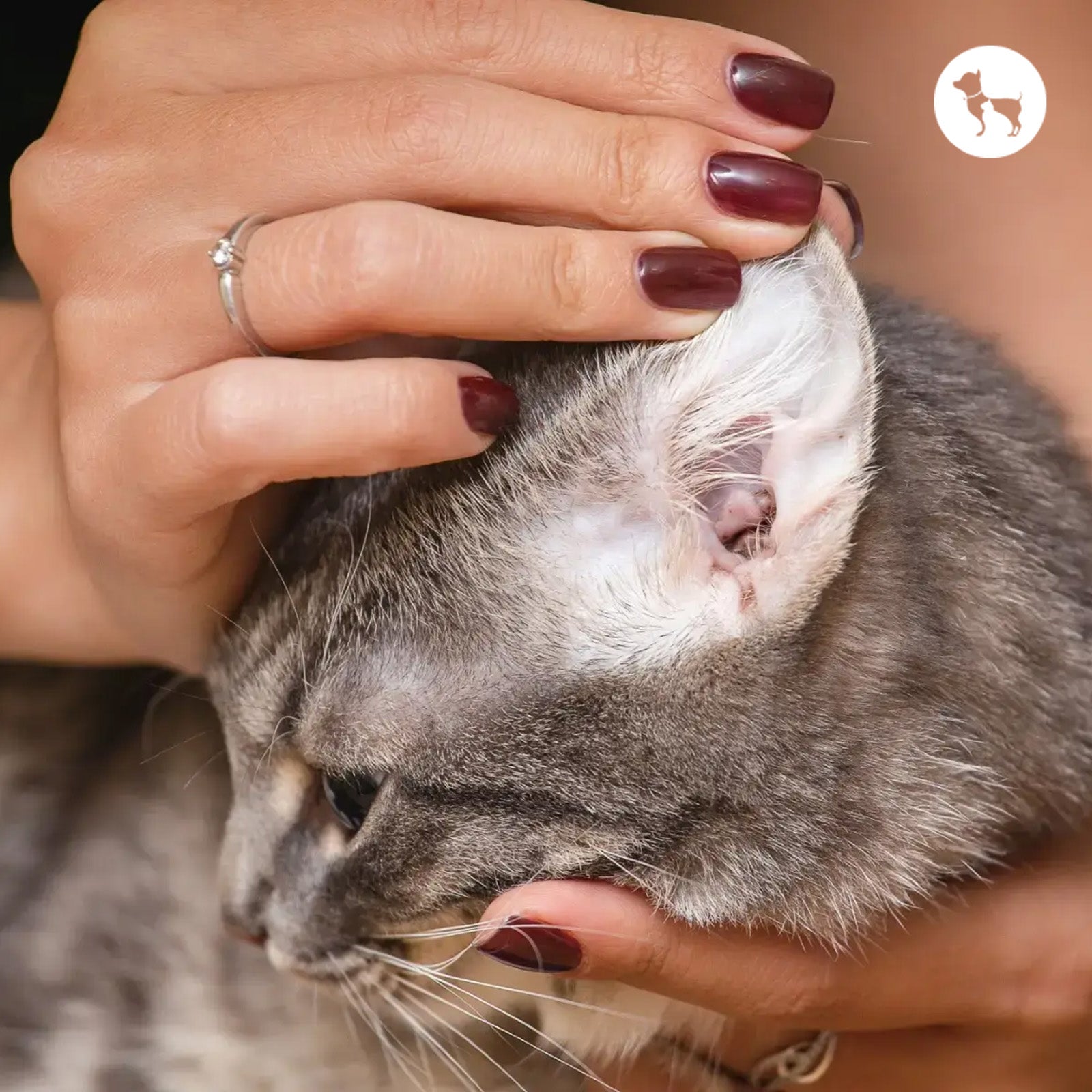
If your cat has suddenly started scratching their ears relentlessly or shaking their head more than usual, then it can be a matter of concern. Ear mites are far more common than many pet parents realise. Ear mites are tiny parasites that grow inside the ear canal, causing intense irritation and discomfort. If these are left untreated, they can lead to infections and long-term ear damage in cats.
However, here’s the thing…ear mites can be treated, and most cats can recover quickly when the proper care is implemented. This blog will outline how to effectively identify, treat, and prevent mites on your feline friend to ensure they remain comfortable and itch-free.
Ear mites (Otodectes cynotis) are microscopic parasites that live in the ear canal, feeding on ear wax and skin debris. They are highly contagious and spread easily between cats and dogs through close contact or shared bedding.
They are especially common in kittens, outdoor cats, and multi-pet households, but even indoor cats can be affected. Left untreated, ear mites can cause intense itching, inflammation, and infections, making early identification and care essential.

Watch for these signs:
Constant ear scratching or rubbing against furniture
Frequent head shaking
Dark, crumbly discharge resembling coffee grounds
Red, inflamed ear canals
Unpleasant ear odour
Scabs or hair loss around the ears
Untreated ear mites don’t just cause itching, but they can lead to bacterial or yeast infections, painful inflammation, and even damage to the eardrum in severe cases. Chronic discomfort can also affect your cat’s appetite, sleep, and behaviour. Early treatment is key to preventing complications and ensuring a smooth recovery.
A veterinarian will examine your cat’s ears using an otoscope and may take a sample of ear debris to confirm the presence of mites under a microscope. This ensures accurate diagnosis and rules out other ear conditions with similar symptoms.
Avoid self-diagnosis or over-the-counter treatments without consulting a veterinarian, as incorrect treatment can worsen ear irritation.

Here are some ways to safely and effectively treat ear mites in cats:
Vet-Prescribed Medications: Most ear mite treatments involve prescription ear drops or topical spot-on medications that kill mites and soothe inflammation. These are typically used for 2 to 4 weeks to ensure all mites and eggs are eliminated.
Cleaning the Ears (If Recommended): Your vet may advise gentle ear cleaning to remove debris before applying medication. Always use a cat-safe ear cleanser and never insert cotton buds deep into the ear canal.
Treat All Pets in the Household: Because ear mites are contagious, all pets in the home may need treatment, even if they show no symptoms.
Complete the Full Course: Stopping treatment early can allow mites to return. Always complete the prescribed duration, even if symptoms improve quickly.
Have a look at some home care tips that help prevent reinfestation and speed up recovery:
Keep your cat’s ears dry and clean
Wash bedding, blankets, and soft toys in hot water
Vacuum resting areas frequently
Prevent contact with untreated animals
Consult a vet right away if your cat:
Cries when ears are touched
Has bleeding or severe swelling in the ear
Loses balance or tilts their head
Stops eating or becomes lethargic
Ear mites may be tiny, but the discomfort they cause is anything but small. With prompt veterinary treatment, proper home care, and a little patience, most cats recover fully and quickly. Staying alert to early signs and maintaining good hygiene can prevent future infestations.
Support your cat’s ear health beyond the vet visit with HUFT’s thoughtfully curated grooming and care essentials, designed to help pet parents maintain comfort, hygiene, and long-term well-being at home.


 Dog
Dog
 Cat
Cat


 Youtube
 Facebook
 Instagram
 Linkedin