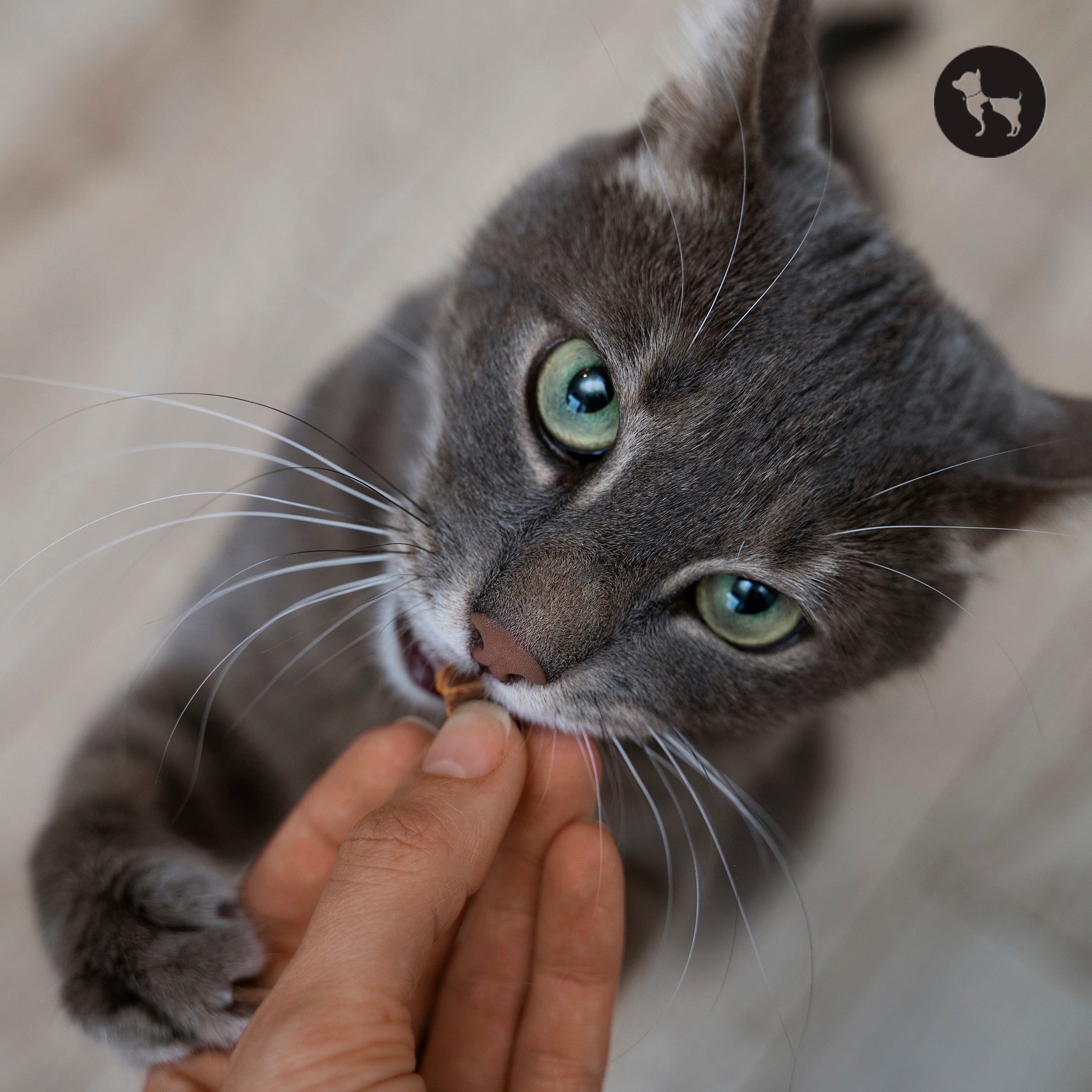
If your cat suddenly sinks their teeth into your hand mid-play, you’re not alone. One moment it feels like a sweet bonding session, the next you’re left wondering “Was that aggression… or were they just having fun?”
Play biting is one of the most common (and confusing) feline behaviours. The good news? In most cases, it’s not aggression at all; it is just excitement mixed with instinct.
Understanding why cats bite during play can help you respond calmly, avoid injury, and build a healthier relationship with your cat.

Cats are natural hunters. Even the most pampered indoor cat carries strong predatory instincts wired deep into their brain. When your cat plays, they aren’t just “playing” in a human sense; they’re rehearsing hunting behaviours like stalking, pouncing, grabbing, and biting.
Kittens learn these skills through play with their littermates. They bite, get bitten back, and slowly learn what’s acceptable. Cats that were separated too early from their litter may not fully learn bite control, which can show up as harder bites during play.
Not all bites mean the same thing. Knowing the difference between playful excitement and true aggression is key.
The body looks loose and bouncy
Ears are upright or slightly sideways
Tail flicks, but isn’t puffed up
Bites are quick and not meant to break skin
The cat comes back for more play
This type of biting usually happens during high-energy play sessions when your cat gets overstimulated.
Ears flattened tightly against the head
Dilated pupils and stiff posture
Growling, hissing, or swatting
Hard bites that break skin
The cat retreats or acts defensively after biting
Aggressive biting is often fear-based or stress-related and needs a very different approach.
It usually happens because something in the moment triggers your cat’s instincts, energy levels, or learned habits. Exploring these common reasons can help you recognise patterns and prevent rough play before it escalates.
Cats can get overstimulated quickly, especially during intense or prolonged play. While they may look happy one moment, crossing their excitement threshold can cause a sudden bite as a release of pent-up energy. This is your cat’s way of saying, “That’s enough for now.” Subtle signs like tail flicking, ears turning sideways, or sudden stillness often appear just before a bite.
When hands or fingers are used during play, cats learn to see them as moving prey rather than part of a human. To a cat, anything that wiggles, darts, or grabs back triggers hunting behaviour: pounce, grab, bite.
Indoor cats don’t always get enough opportunities to burn energy naturally. Without regular, structured play, that stored energy can come out during spontaneous interactions, often in the form of rough play or biting. This is especially common in young cats or single-pet households where stimulation is limited.
Kittens between 3 to 6 months experience discomfort as their adult teeth come in. Biting helps relieve gum irritation, which is why they may chew on hands, clothes, or furniture. With proper redirection to safe chew toys and play items, this phase usually passes as they mature.
Cats repeat actions that get results. If biting leads to attention, loud reactions, or suddenly stopping play in a way they prefer, they may learn that biting “works.” Over time, this behaviour becomes a habit unless gently corrected through consistent responses and positive reinforcement.

Punishing a cat for biting doesn’t work and can actually increase fear and aggression. Instead, focus on redirection and consistency. Here are some ways to minimise it:
Use Toys, Not Hands: Always use wand toys, feather teasers, or balls to create distance between your hands and your cat’s teeth.
End Play Calmly: If your cat bites, stop playing immediately. Stand up, turn away, and ignore them for a minute. This teaches them that biting ends the fun.
Schedule Regular Play Sessions: Two to three short, structured play sessions a day help release energy in a healthy way.
Watch for Warning Signs: Tail lashing, ears turning sideways, or sudden stillness often mean overstimulation. Pause play before it turns into a bite.
Reward Gentle Behaviour: Reward gentle play by praising your cat, offering a small treat, or giving affection when they behave well. This helps them understand that playing softly gets a positive response.
Occasional play biting is normal, especially in kittens and young cats. It becomes a concern only when:
Bites are frequent and intense
Skin is regularly broken
Behaviour appears sudden or unprovoked
The cat shows fear or anxiety
Most cats don’t bite because they’re “mean” or aggressive. They do it out of excitement, overstimulation, or natural play instincts. With the right toys, clear boundaries, and a better understanding of feline body language, playtime can stay fun and bite-free for both of you.
You can explore some of the best cat-safe toys, scratchers, and enrichment essentials at the HUFT app or your nearest store. When cats have a healthy and structured routine to release their energy, it strengthens trust, reduces rough play, and helps build a calmer, happier bond over time.


 Dog
Dog
 Cat
Cat


 Youtube
 Facebook
 Instagram
 Linkedin