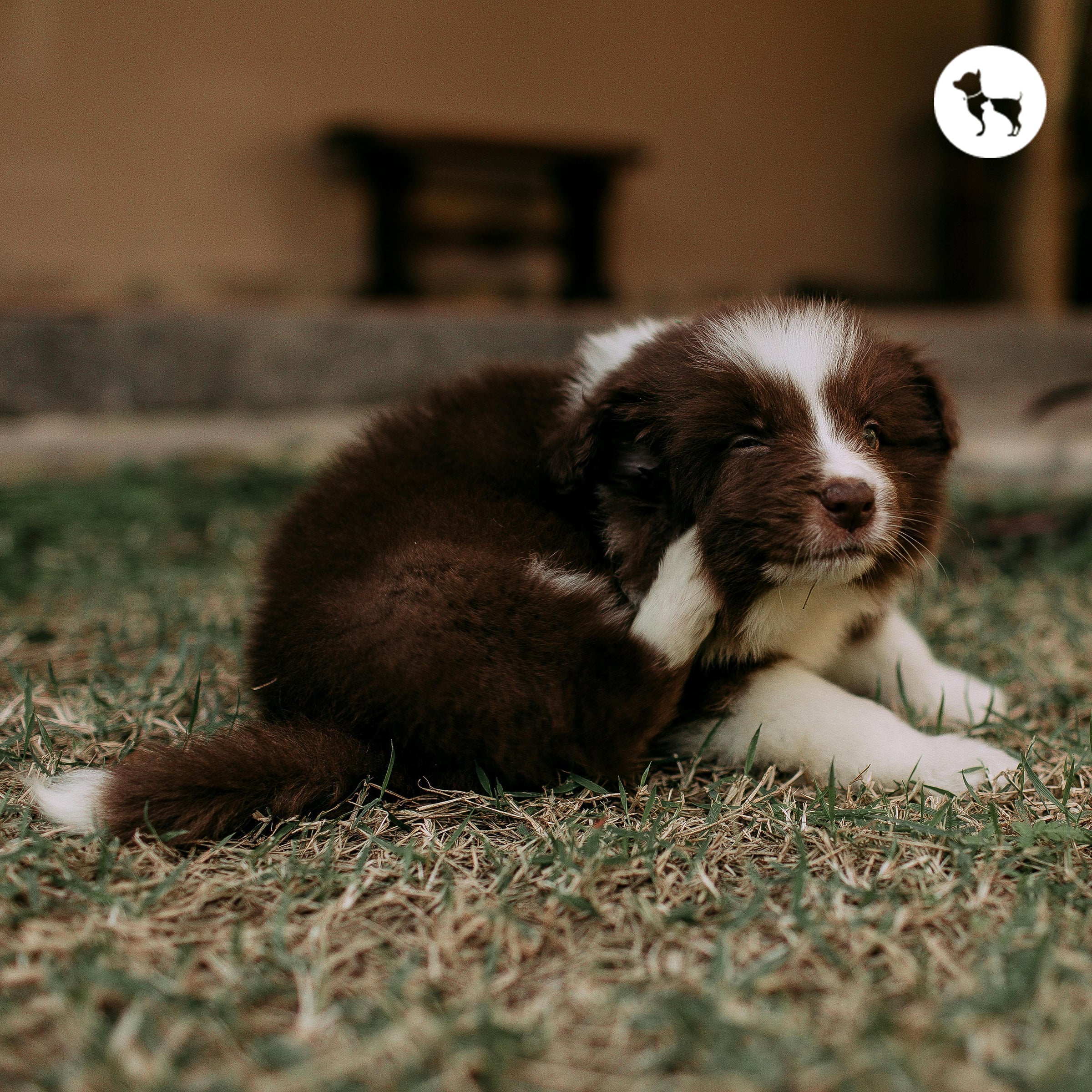
The first time you find a tick on your puppy, it's unsettling. The first time you find several and realise they've been there a while, it's a wake-up call.
Ticks and fleas aren't just a nuisance. In puppies, whose immune systems are still developing, the consequences are more serious than they are in adult dogs. Heavy flea infestations can cause anaemia. Tick bites can transmit diseases like ehrlichiosis and babesiosis. Flea allergy dermatitis can turn minor irritation into chronic skin damage. And because puppies spend so much time on the floor, in grass, and in close contact with their environment, their exposure risk is consistently high.
The good news is that prevention is simple if you're using the right products in the right combination. Here's what actually works, how each approach differs, and how to build a protection routine that fits your puppy's life.

Not every tick and flea product is appropriate for puppies. Many chemical-based treatments have minimum age and weight requirements, some can't be used below 8 weeks, others not until 12 weeks or later.
This is where natural and plant-based formulations become particularly relevant. They tend to have a gentler safety profile, making them suitable for younger puppies and for frequent use. They're also a better fit for households with young children or other pets, where chemical residue is a concern.
That said, "natural" doesn't mean "less effective" when the right ingredients are used in the right concentrations. Lavender, rosemary, lemongrass, geranium, and diatomaceous earth all have documented pest-repelling or pest-killing properties. The key is knowing which format to use, when, and why.

With so many cat treats available today, it can be difficult to tell which ones are genuinely worth buying. Some focus on high protein nutrition, while others are designed to support digestion, skin health, urinary care, or simply make treat time more enjoyable. Here’s a closer look at products that stand out and what makes each one different.
Bath time is already part of your puppy's routine, this shampoo makes it do double duty. Formulated with lavender oil, rosemary oil, aloe vera, chamomile extract, and wheat germ oil, it repels ticks and fleas through the natural insect-deterrent properties of its essential oil blend.
Lavender and rosemary are the active repellents here. Chamomile soothes any existing skin irritation from bites. Aloe vera keeps the coat hydrated. Wheat germ oil supports skin health and reduces inflammation, useful for puppies whose skin has already been irritated by scratching.
Crucially, it's sulphate-free, paraben-free, soap-free, and pH-balanced for canine skin. Safe for puppies and adults alike, it's a solid foundation for any tick and flea prevention routine — not a standalone solution, but an important and regular layer.
How to use it well: Leave the lather on for 2–3 minutes before rinsing. Focus on the neck, belly, and back, areas where ticks prefer to attach. Used consistently at each bath, it maintains a low-level repellent effect on the coat.
This is your pre-walk defence. The spray uses lemongrass and geranium essential oils, both well-established insect repellents in a formula that's handmade, organic, vegan, and completely free of alcohol, SLS/SLES, parabens, and synthetic fragrance.
The key difference from the shampoo is timing and application. The shampoo is a post-bath treatment. The spray is applied before exposure, before the park, before a garden play session, before anywhere your puppy is likely to encounter ticks or fleas. This is the barrier-at-point-of-contact layer.
Application is simple: ruffle the coat and spray onto the back, tail, legs, and belly. For the head and around the ears, areas you don't want to spray directly, apply a small amount to your palms and rub it in gently. Shield your puppy's eyes throughout.
Paws are one of the most overlooked tick entry points. When a dog walks through grass or undergrowth, ticks often attach at ground level, paws, legs, and the underside of the belly, before migrating to warmer, hidden areas of the body.
The HUFT Paw Balm addresses this gap. It serves a dual function: it softens and protects cracked paw pads while the essential oils in the formula actively repel ticks and fleas. It's handmade, organic, vegan, and free of synthetic additives. The candelilla wax base (a plant-derived, vegan alternative to beeswax) creates a protective barrier on the paw surface that makes it harder for parasites to attach.
Packed in a small aluminium tin, it's genuinely portable, easy to apply before a walk and carry in a bag for on-the-go use. For puppies who spend a lot of time on grass or in the garden, this is a low-effort but genuinely useful addition to the routine.
This one works differently from sprays and shampoos, and it's particularly valuable for the environmental layer of prevention.
The active ingredient is diatomaceous earth (food grade), a naturally occurring mineral made from fossilised microscopic algae. Its particles are microscopic but physically sharp. When ticks and fleas come into contact with DE, those particles pierce their exoskeleton and cause dehydration, killing them within days. The mechanism is entirely physical, no chemicals, no toxicity.
The formula adds cedarwood, neem, and geranium oils for additional repellent effect, plus arrowroot powder as an inert carrier. It's safe to use on your pet's coat and in their environment, on carpets, bedding, and resting areas where fleas breed.
This environmental application is what makes it so useful. Dusting your puppy's bedding and sleeping area with this powder directly disrupts the flea lifecycle where the majority of the population lives.
Note: Not suitable for use on pregnant pets. Keep away from your puppy's face and respiratory zone during application, and follow dosage instructions on the pack.
A simple, layered approach for puppies above 8 weeks:
Daily / Pre-walk: Apply the HUFT Organic Spray to the coat before outdoor sessions. Apply the Paw Balm before walks in grass or undergrowth.
Weekly: Dust the puppy's bedding and sleeping area with the HUFT Natural Anti Tick and Flea Powder. Spray the surrounding environment with Bramton OUT! if there's active flea presence.
Every bath: Use the HUFT Natural Tick & Flea Repellent Shampoo or Beaphar Dimethicare, leaving the lather on for 2-3 minutes before rinsing.
Ongoing: Fit the Ecolife collar for continuous background protection between applications.
Tick and flea prevention doesn't have to be complicated, but it does need to be consistent and layered. A shampoo alone won't protect a puppy who plays in the park every day. A spray alone won't break an established flea cycle in your home. Used together, the right combination of products covers every stage of the problem.
You'll find the full range of tick and flea prevention products for puppies at Heads Up For Tails, online for convenience or in-store if you'd like guidance on putting together the right routine for your puppy's specific needs. Because the best protection is the one that actually gets used.
For prevention, natural products work well when used consistently and in combination. They repel rather than kill on contact (with the exception of diatomaceous earth and dimethicone-based products). Chemical treatments may act faster and last longer in some cases, but natural options are significantly safer for frequent use on puppies and in family homes.
Most tick and flea shampoos can be used at each regular bath, typically once every 3 to 4 weeks for puppies. Over-bathing can dry out the skin. The spray and paw balm cover the gaps between baths.
Look for flea dirt, small dark specks in the coat that turn red-brown when wet (they're digested blood). Persistent scratching around the base of the tail, belly, and groin is a strong indicator. Run a fine-tooth comb through the coat onto white paper to check for flea dirt or live fleas.


 Dog
Dog
 Cat
Cat


 Youtube
 Facebook
 Instagram
 Linkedin