Dogs continue to be India's favourite pets, with the country's pet dog population growing from 12.6 million in 2014 to over 33.6 million in 2023. Statista Research Department estimates also suggest this number could cross 51 million by 2028, reflecting the rising popularity of companion dogs across the country.
Among the many breeds loved by Indian pet parents, the German Shepherd stands out for its intelligence, loyalty, and versatility. While most people are familiar with the classic short-coated German Shepherd, the long-coated variety is equally captivating and often sparks curiosity among prospective parents. Although both belong to the same breed, their coats bring noticeable differences in grooming requirements, shedding, climate adaptability, and overall maintenance.
If you're wondering which coat type is better suited to your home and lifestyle, this guide compares long coat and short coat German Shepherds to help you make an informed decision.

Both coat types come from the same breed lineage. The long coat is caused by a recessive gene, meaning both parents need to carry the gene for a long-coated puppy to appear in a litter. Short coat is the dominant expression, which is why it's more commonly seen. A short-coated GSD can carry the long coat gene without expressing it, producing long-coated puppies when bred with another carrier.
This genetic reality means:
Long coat GSDs are naturally less common than short coats
Two short-coated parents can produce long-coated puppies if both carry the recessive gene
Responsible breeders can identify carriers through genetic testing
The coat type does not affect the dog's core breed characteristics, intelligence, trainability, or working ability

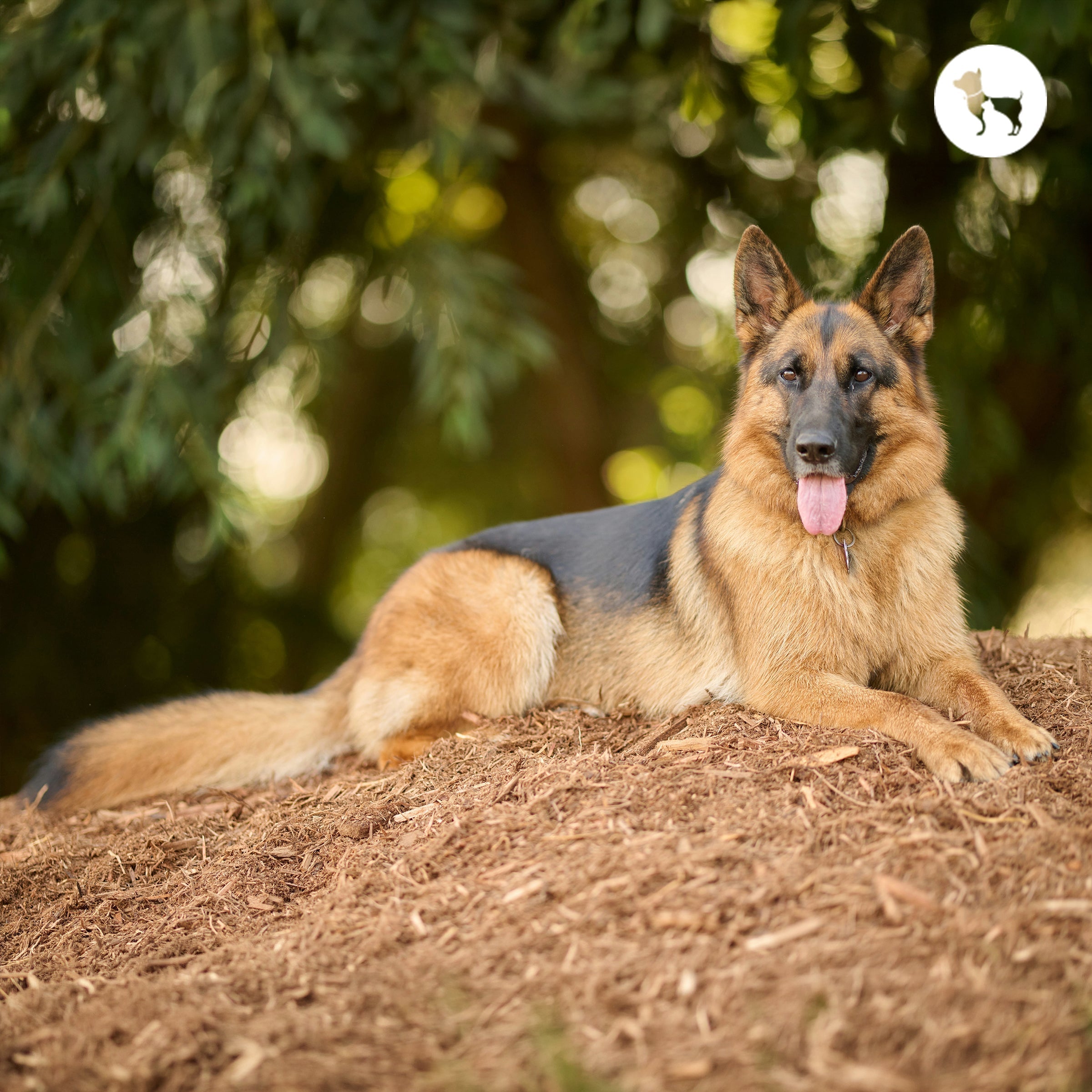
The most noticeable difference between the two varieties is their coat length. While both share the same muscular build, erect ears, alert expression, and confident stance, their coats create distinctly different silhouettes.
The short coat, also known as the standard coat, is the variety most commonly associated with the breed. It features a medium-length outer coat that lies close to the body, supported by a dense, weather-resistant undercoat. The coat has a clean, well-defined appearance with minimal feathering on the legs, ears, or tail, allowing the breed's athletic structure to stand out.
Long coat German Shepherds have a noticeably longer, silkier outer coat that gives them a fuller, softer appearance. The fur is especially prominent around the ears, neck, chest, back of the legs, and tail, creating a feathered look and a pronounced mane around the shoulders. Their coat often gives them a more elegant appearance compared to the standard variety.
Both long- and short-coated German Shepherds shed year-round and experience heavier seasonal shedding. However, the time and effort required to maintain their coats differ significantly.
The short-coated German Shepherd is comparatively easier to groom and is a good choice for pet parents looking for a lower-maintenance coat.
Grooming requirements:
Brush 2-3 times a week to remove loose hair and maintain coat health.
Expect heavier shedding twice a year, when daily brushing is recommended.
Bathe every 4-6 weeks, or as needed after outdoor activities.
The shorter coat dries quickly and is less prone to tangles or matting.
With a consistent brushing routine, the coat remains healthy and easy to manage throughout the year.
The long coat German Shepherd needs more frequent grooming to prevent knots, mats, and excessive hair build-up
Grooming requirements:
Brush 4-5 times a week, or ideally daily during shedding seasons.
Pay extra attention to the ears, chest, tail, neck, and back of the legs, where the fur is longest.
Longer fur traps dirt, moisture, and loose hair more easily, requiring regular maintenance.
Bathe every 4-6 weeks, ensuring the coat is dried thoroughly to prevent skin issues.
Consider professional grooming every 6-8 weeks to maintain coat condition and manage shedding.
Coat type has very little influence on a German Shepherd's personality. Whether long coat or short coat, both varieties are recognised for the qualities that make the breed one of the world's most trusted working and family dogs.
Highly intelligent and quick learners.
Loyal and deeply devoted to their family.
Naturally alert and protective.
Energetic and happiest with an active lifestyle.
Thrive on regular training and mental stimulation.
Can make excellent family companions when properly socialised.
Some breeders and experienced owners observe that long-coat German Shepherds may appear slightly calmer or more relaxed, while short-coat German Shepherds are more commonly bred for police, military, and working roles. However, these differences are largely influenced by breeding lines rather than coat length.
Responsible breeding and healthy bloodlines.
Early socialisation from puppyhood.
Consistent training with positive reinforcement.
Daily physical exercise and enrichment activities.
A stable home environment and regular interaction with the family.
Both coat types share the same breed-level health concerns, including hip and elbow dysplasia, degenerative myelopathy, and bloat. But coat type adds a few specific considerations.
Skin allergies can be harder to spot under a dense coat; regular brushing helps you catch irritation early
The double coat sheds heavily and can cause issues if a dog ingests large amoucnts during self-grooming
Skin infections under the coat, particularly in the armpits, groin, and behind the ears, are more common if grooming is inconsistent
Ears need closer monitoring since the feathering around the ears can trap moisture and debris
Post-bath drying is crucial; a damp coat that doesn't dry properly is a direct pathway to fungal skin issues
|
Factor |
Short Coat GSD |
Long Coat GSD |
|
Coat length |
Medium, close-lying |
Long with feathering |
|
Undercoat |
Dense double coat |
Thin or absent undercoat |
|
Shedding |
Consistent, heavy during coat blows |
Less dense shedding, but more tangling |
|
Grooming frequency |
2-3 times per week |
4-5 times per week minimum |
|
India climate suitability |
Better suited, more adaptable |
Needs consistent indoor cooling |
Choosing between a long coat and short coat German Shepherd depends on your lifestyle, grooming commitment, and local climate. While their coats differ in maintenance, both share the same loyal, intelligent, and confident personality.
No matter which coat type you choose, regular grooming is key to keeping your GSD's skin and coat healthy. At Heads Up For Tails, you'll find everything your German Shepherd needs, from de-shedding brushes and grooming tools to shampoos, conditioners, skin & coat care essentials, food, treats, beds, and a lot more.
Shop online or visit your nearest HUFT store to keep your GSD looking and feeling its best!
No. Both are the same breed. The coat difference comes down to a recessive gene and does not affect breed classification, temperament, or working ability.
Short coat GSDs typically shed more volume overall due to their denser double coat, particularly during seasonal coat blows. Long coat GSDs shed less densely but require more grooming to prevent matting and tangling.
No. Both coat types are equally intelligent and trainable. Training outcomes depend on consistency, socialisation, and the individual dog's drive, not coat length.
Monsoon humidity significantly increases the risk of skin infections under a long coat. During this period, increase brushing frequency, ensure thorough drying after any exposure to rain, and check the skin under the coat weekly for redness, odour, or unusual flaking.


 Dog
Dog
 Cat
Cat


 Youtube
 Facebook
 Instagram
 Linkedin